
Progressive Veterinary Association calls for action on pet parasiticide use
With mounting concern about the environmental impacts of products containing imidacloprid and fipronil, the PVA has called on the Veterinary Medicines Directorate to clamp down on the distribution of these products without delay.
The King’s Speech - big on pomp, little on animal welfare
The Progressive Veterinary Association is deeply disappointed that the King’s Speech and the accompanying legislative summary contained no meaningful commitments on animal welfare, despite repeated assurances from government that this Parliament would deliver a modern, science‑led framework for protecting animals at home and abroad.
The PVA had expected to see clear legislative follow‑through on the commitments in the government’s Animal Welfare Strategy for England, published in December 2025. That strategy promised a decisive shift toward evidence‑based policy, stronger enforcement mechanisms, and long‑overdue reforms to address the welfare of companion animals, farmed animals, and wildlife. Yet none of these priorities were reflected in today’s agenda.
This omission is not merely symbolic. Every delay has real‑world consequences for the animals whose welfare depends on robust, enforceable standards. The profession continues to raise concerns about gaps in regulation—from the need for updated licensing frameworks, to improved oversight of breeding and trade, to measures addressing the welfare impacts of emerging technologies and climate‑driven disease risks. These issues cannot be resolved through voluntary guidance or piecemeal initiatives. They require legislation.
The government has already articulated some good ambitions. What is missing is action. We therefore call on ministers to make good on the commitments set out in the 2025 Strategy, including:
• Delivering the promised ambitious programme of reforms.
• Strengthening enforcement capacity and resourcing for local authorities.
• Modernising welfare codes in line with current veterinary science and knowledge.
• Ensuring that international trade and tourism policy aligns with high domestic welfare standards.
Veterinary professionals stand ready to support the development of effective, evidence‑based and animal-focussed legislation. However, government cannot claim global leadership on animal welfare while its own strategy remains unimplemented. The powers that be in Westminster must now demonstrate that the promises they have made were more than warm words.

Progressive Veterinary Association calls for greater regulation of pet parasiticide use
February 2026
The Progressive Veterinary Association (PVA) recognises the Veterinary Medicines Directorate (VMD)’s acknowledgement of the growing evidence of environmental harm caused by veterinary parasiticide use (Vet Times 16 December 2025).
However, we are concerned that the emphasis on “collaborative action” risks obscuring the urgent need for stronger regulatory intervention and clearer national leadership to control the discharge of parasiticides into the environment. Given their relative or absolute inefficacy, the vast majority of legacy parasiticides (imidacloprid and fipronil) are not prescribed by veterinary surgeons, but by pet retailers and online pharmacies. No amount of “collaborative action” by the veterinary profession will significantly influence their provision in this manner.
Evidence of environmental contamination linked to companion-animal parasiticides has been available for several years, yet regulatory responses have remained cautious and slow. While collaboration with the profession and industry is important, voluntary behaviour change has not delivered the scale or pace of improvement required to address ecological harm, inappropriate prescribing, and the growing availability of pet parasiticides over-the-counter. In this context, the VMD’s current approach falls short of what is needed.

Parasiticides have demonstrable impacts beyond the treated animal. As such, their use should be governed by robust, enforceable frameworks, rather than relying on guidance and goodwill. Risk-based prescribing cannot succeed in an environment where routine prophylactic use has become normalised, marketing pressures are largely unchecked, and environmental risk assessments are not transparently integrated into regulatory decision-making.
The PVA therefore calls on the VMD to take more decisive action, including:
Stronger regulatory controls on routine prophylactic use, particularly where evidence of benefit is weak or context-dependent;
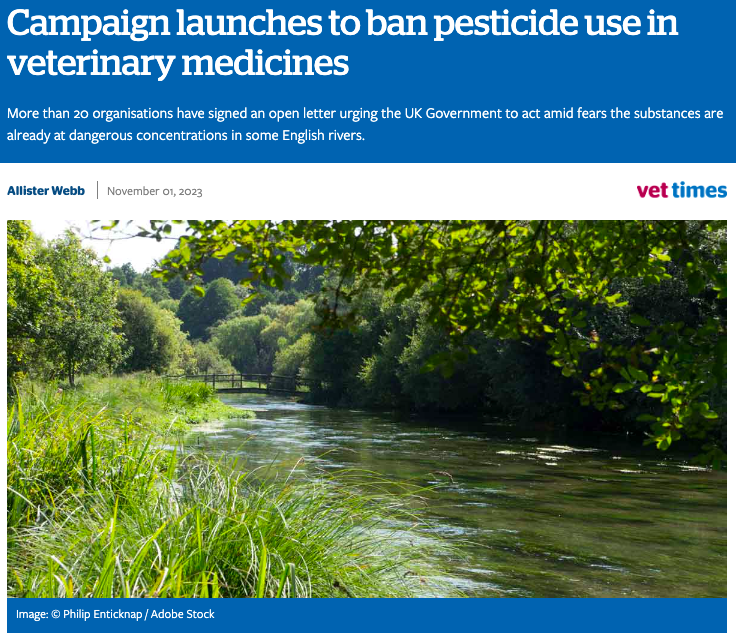
The immediate banning of imidacloprid and fipronil containing products, along with the development of a plan for their large scale recall and safe destruction;
Mandatory, standardised risk-assessment requirements to support prescribing decisions;
Greater transparency around environmental risk data used in licensing and post-authorisation monitoring; and
Independent oversight of industry influence on prescribing norms, pet owner behaviour, and professional education.
Veterinary professionals are increasingly aware of their responsibilities within a One Health framework, which includes responsible environmental stewardship. Many are actively seeking clearer boundaries and stronger support from regulators. Without firmer action, responsibility continues to be displaced onto individual clinicians and their clients, rather than addressed at a systemic level.
The PVA urges the VMD to move beyond facilitation and towards assertive regulatory leadership that reflects the scale of the issue and protects animal health, public trust, and the wider environment.
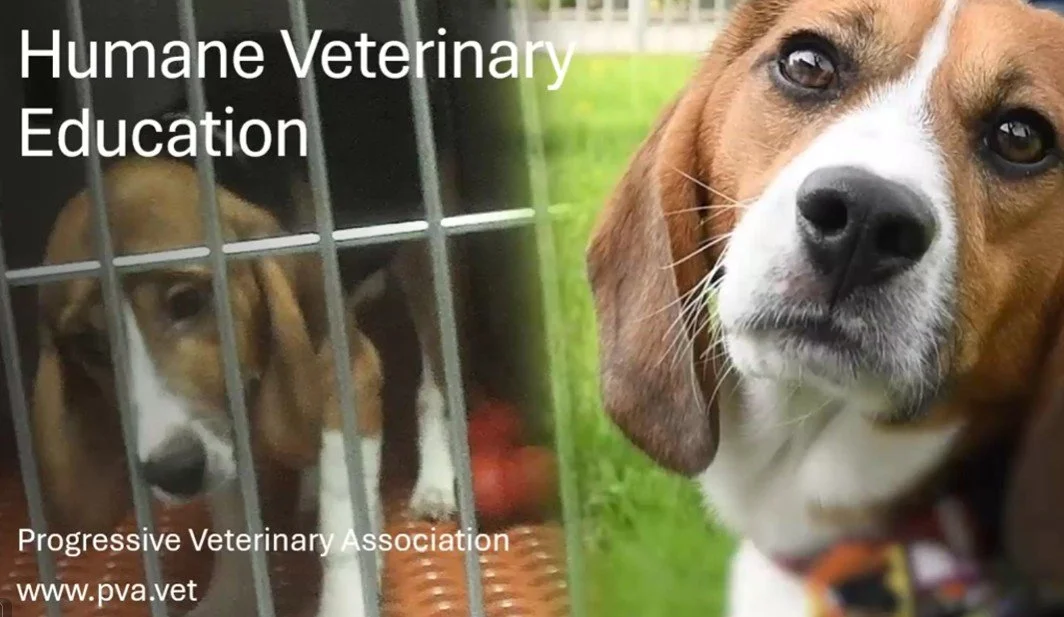
Humane Veterinary Education
On 2nd February 2026, the PVA’s Andre Menache hosted a webinar on humane veterinary education. The webinar featured and introduction from Andre, followed by talks on Humane Alternatives in Veterinary Education by Nick Jukes, and Student Conscientious Objection by barrister Ayesha Smart. A recording of the webinar is available on our YouTube channel. You can view it by clicking the ‘View Webinar’ button.
PVA response to government’s Animal Welfare Strategy for England.
December 2025
The Progressive Veterinary Association broadly welcomes the publication of the UK Government’s Animal Welfare Strategy for England, an ambitious programme of reforms that promises to improve the lives of millions of animals across the country. The Strategy includes proposals to end cruel practices such as puppy farming, phase out long-standing confinement systems on intensive livestock farms, and tackle harmful activities like trail hunting and snaring — measures that resonate strongly with veterinary and animal welfare science, as well as with the wider public.
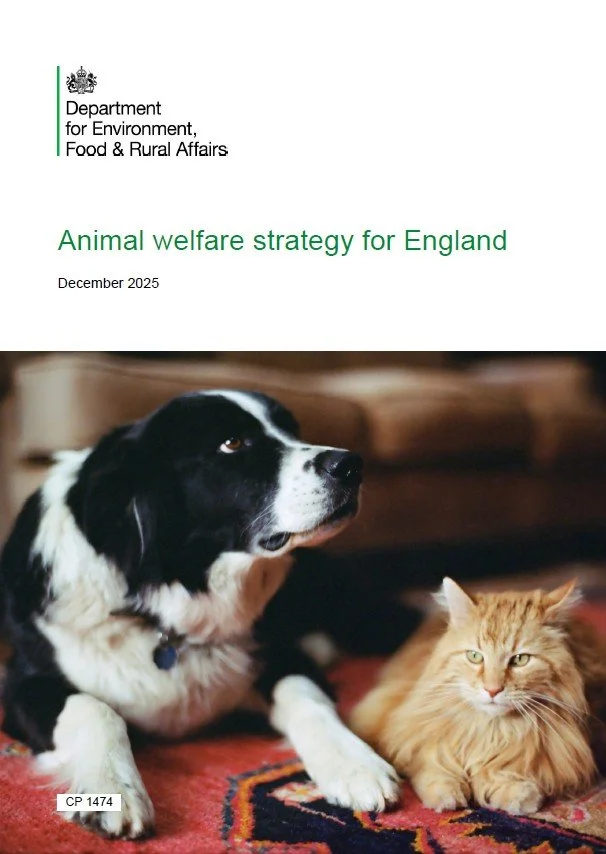
The PVA and its members firmly believe that while measures to improve animal welfare must be rooted in evidence, they must also be precautionary and compassionate and reflect our ethical views as a profession. We commend the government’s commitment to strengthening protections for pets, farmed animals, and wildlife, which include consulting on phasing out the use of cages in farming, moving away from the use of carbon dioxide to stun pigs, and introducing standards for the humane killing of fish. Such measures go some way towards recognising the modern understanding of sentience and the capacity for suffering across species.
However, the ambition in the strategy must be matched by timely legislation, clarity, resources and enforcement. While policy proposals signal meaningful progress, their success depends on the development of robust regulatory frameworks, the provision of sufficient resources for their implementation, and effective enforcement mechanisms, including deterrent punitive measures for offenders.
Veterinarians and their teams will be vital partners in delivering welfare outcomes — from advising clients to supporting monitoring and compliance — but only if their role is facilitated through the provision of clear guidance and practical tools.
We particularly emphasise the need for investment in education and professional support, ensuring veterinarians are recognised not just as clinical practitioners but as welfare advocates and educators in their communities, and that their services continue to be available and affordable to the wider public at a time of serious concern about the increasing control being exercised by corporate actors in the sector. The PVA will continue to call for greater involvement of independent practices in the Competition and Markets Authority’s investigations into the veterinary sector, and looks forward to taking part in an inclusive, comprehensive and transparent review of the Veterinary Surgeons’ Act.
A forward-looking strategy should also address the enforcement gap identified by experts, including enhancing transparency and strengthening inspection regimes across all sectors.
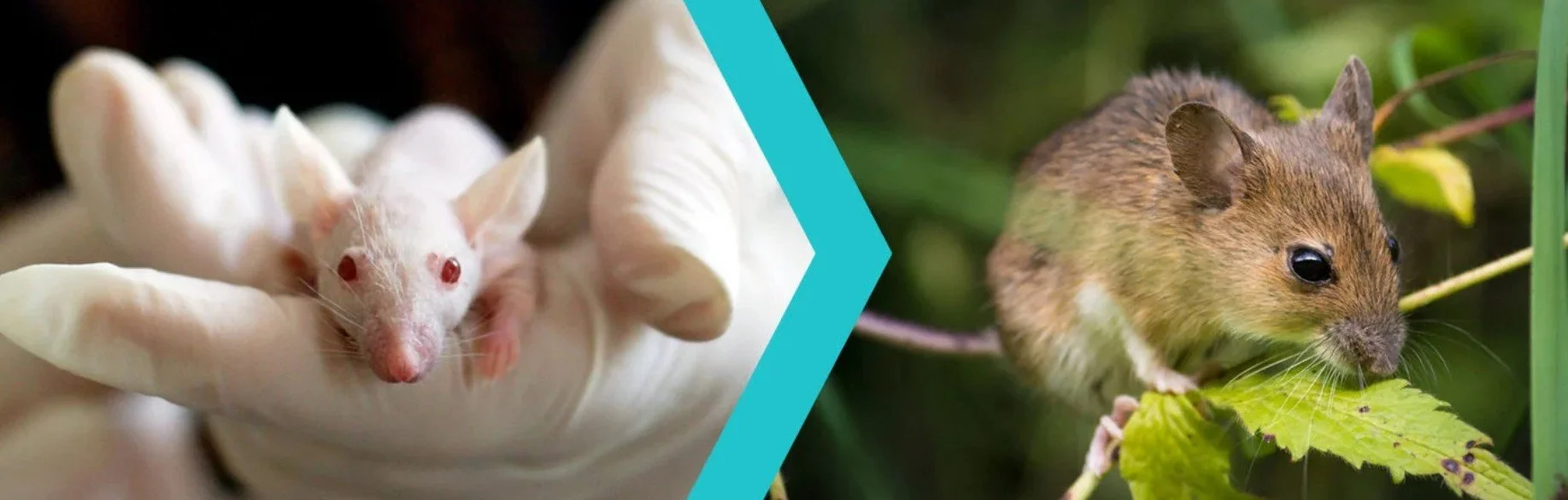
The strategy also fails to address many issues which continue to cause the suffering of many millions of animals. A clear commitment and timeline for the elimination of the use of laboratory animals is lacking, in spite of the existence of comprehensive evidence clearly demonstrating that animal testing, as well as causing unnecessary suffering, is outdated and ineffective. The need for rescue and rehoming centres and sanctuaries to be defined and licensed in recognition of their vital work and to eliminate rogue practices, the need to address the continued exploitation of animals for sport, and the need to tackle the trade in and keeping of wild animals as pets which is seriously out of control, do not feature. The strategy also focusses on addressing specific aspects of farming activities, such as the welfare of farmed salmon at the point of slaughter, the use of farrowing crates for pigs, and the continued confinement of broilers in tiny cages, which are welcome, but fails to address many of the wider animal welfare harms that result from intensive animal production systems. The UK’s ability to encourage progressive change in other countries, for example by linking the elimination of egregious practices (such as the slaughter of whales and dolphins in the Faroe Islands) to trade deals, does not feature strongly enough. The promise to explore with industry and NGOs legislative and non-legislative options to stop the advertising in the UK of low animal welfare activities abroad also smacks of kicking the can further down the road, given the Animals (Low Welfare Activity Abroad) Act itself received Royal Assent more than two years ago.
The Labour party also promised in its election manifesto to “end the ineffective badger cull”. However, while it has indicated that intensive and supplementary culls in the high-risk and edge areas of England will end from January 2026, the government continues to focus on badgers as a source of bovine TB in cattle, and has failed to fully engage with independent experts from the disease control, wildlife and animal welfare sectors during the development of its National Bovine TB strategy. The animal welfare strategy provided a key opportunity to recognise the massive animal welfare impacts of badger culling, and the need for a major shift in direction. Its omission is extremely disappointing.
So while the PVA supports the overarching direction of the Strategy and stands ready to work collaboratively with government, the wider veterinary profession, industry and civil society to ensure these reforms deliver tangible improvements in animal welfare, much remains to be done before we can join with the Minister acknowledging this strategy as “the most ambitious animal welfare programme in a generation.”
The PVA’s Andre Menache considers whether the Department of Science, Innovation and Technology’s new strategy on Replacing Animals in Science will deliver an end to animal testing.

Wildlife charity welcomes progressive outcomes from World Conservation Congress
Vets views mixed on badger cull axe plan

RCVS responds to Progressive Veterinary Association's referendum call

Progressive Veterinary Association to host inaugural conference

Call for referendum on RCVS reform plans

RCVS rejects demands for governance referendum

Vets welcome parliamentary pet abuse and welfare inquiry

PVA joins campaign to protect waterways from veterinary pesticides

PVA joins the fight against greyhound racing in the UK

PVA calls for RCVS to think again about its ‘under care’ plans

PVA launch covered in Vet Practice